State and local sales tax rates differ because a receipt may include a statewide base rate plus city, county, district, or special local taxes. Reverse tax should use the full combined rate charged on the taxable sale, not only the state portion. Local boundaries, ZIP code mismatches, product taxability, marketplace collection, exemptions, shipping rules, and transaction date can all change the final rate. Receipt tax lines confirm the combined rate.
What Is a State Tax Rate?
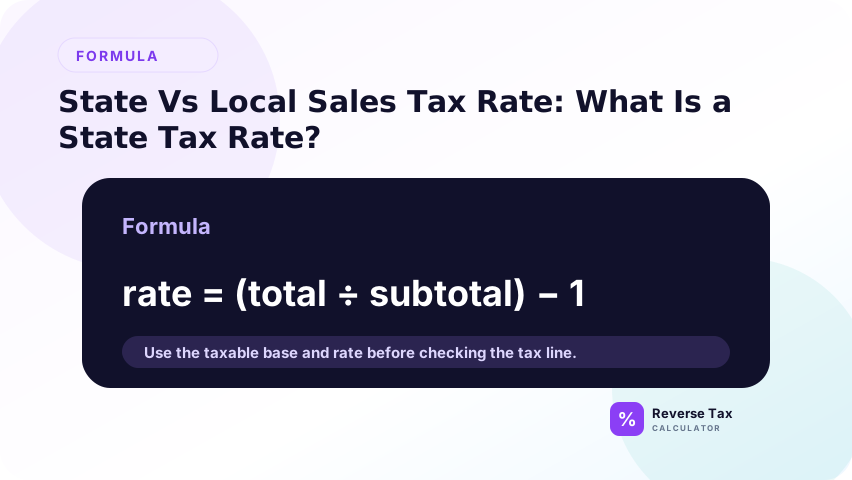
A state tax rate is the statewide portion of sales tax or use tax. It applies across the state, but it may not be the full amount charged at checkout.
Example structure:
| Component | Role |
|---|---|
| State rate | Base statewide tax |
| County rate | Local county component |
| City rate | Local city component |
| District rate | Special local district component |
| Combined rate | Total applied rate |
If you use only the state rate when the actual transaction included local taxes, your reverse tax result will be wrong.
What Is a Local Combined Rate?
A local combined rate is the total rate applied to a taxable sale in a specific location. It combines all applicable layers.
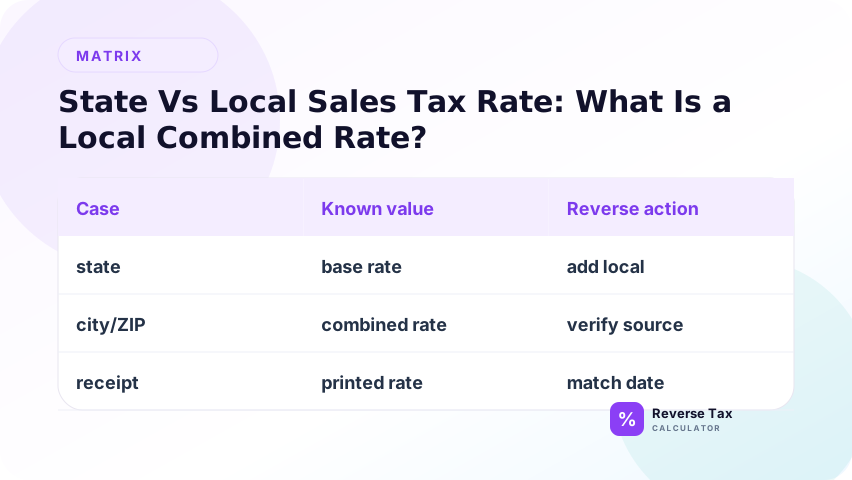
California CDTFA gives a useful official example of this concept. Its rate page says the statewide rate is 7.25 percent, and that local jurisdictions can add district taxes that increase the tax owed. The page also provides current rate files and an address lookup tool.
That does not mean California rules apply everywhere. It shows the general rate-selection problem: location can change the final rate.
Why Combined Rate Matters for Reverse Tax
Reverse tax uses a multiplier:
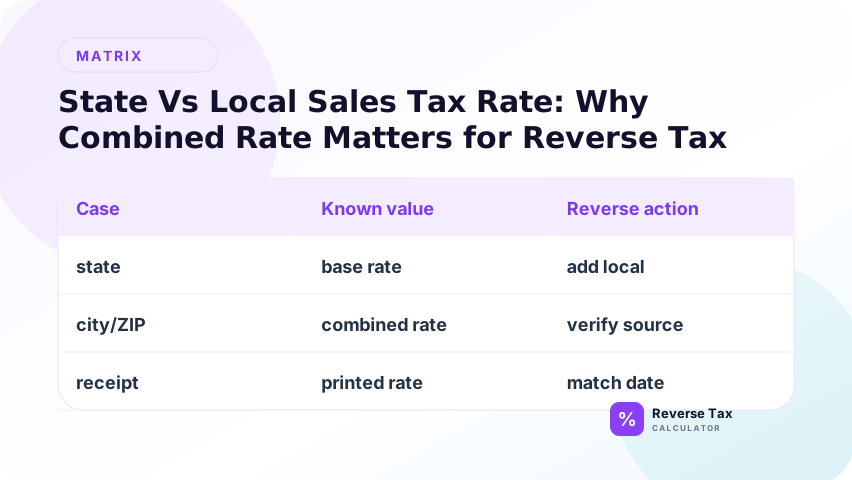
Multiplier = 1 + rate / 100
If the rate is too low, the calculator removes too little tax. If the rate is too high, it removes too much tax.
| Rate used | Total | Pre-tax amount | Included tax |
|---|---|---|---|
| 6 percent | 108.00 | 101.89 | 6.11 |
| 8 percent | 108.00 | 100.00 | 8.00 |
Both calculations look reasonable, but only the rate that actually applied to the transaction is correct.
State Rate vs Combined Rate Table
| Question | State rate | Local combined rate |
|---|---|---|
| What does it include? | Statewide portion | State plus applicable local layers |
| Is it location-specific? | Usually broad | Yes |
| Is it enough for reverse tax? | Only if no local tax applies | Usually yes for checkout totals |
| Can it change by city or district? | No or rarely | Yes |
| Best source | State tax authority | Official lookup or rate table |
Example Calculation
Suppose a receipt total is 216.00. The state rate is 6 percent, but the combined local rate is 8 percent.
Using state rate only:
216.00 / 1.06 = 203.77
216.00 - 203.77 = 12.23
Using combined rate:
216.00 / 1.08 = 200.00
216.00 - 200.00 = 16.00
The difference is 3.77 in the pre-tax amount and 3.77 in the tax amount.
Why the State Rate Error Gets Bigger with Larger Totals
The error scales with the receipt or invoice amount. A 2 percentage point rate difference may look small, but it can materially change the split on high-value purchases.
| Tax-inclusive total | Using 6 percent tax | Using 8 percent tax | Tax difference |
|---|---|---|---|
| 108.00 | 6.11 | 8.00 | 1.89 |
| 216.00 | 12.23 | 16.00 | 3.77 |
| 1,080.00 | 61.13 | 80.00 | 18.87 |
| 10,800.00 | 611.32 | 800.00 | 188.68 |
This is why combined-rate selection matters more for invoices, business purchases, and tax reconciliation than for casual mental math.
How Local Rates Are Built
Local combined rates may include several layers:
| Layer | Why it matters |
|---|---|
| State | Base rate |
| County | May apply throughout county |
| City | May apply inside city limits |
| District | May apply to certain areas |
| Transit or special district | May apply by boundary |
This is why address-level lookup can matter. A ZIP code can cross tax boundaries, and a city name can include addresses inside and outside special districts.
Address, ZIP Code, City, and County
Different location fields have different reliability.
| Location input | Reliability | Reason |
|---|---|---|
| Full address | Strongest | Can match local district boundaries |
| City and state | Medium | May miss districts or special zones |
| County | Medium | May miss city-specific taxes |
| ZIP code | Weak to medium | ZIP codes can cross boundaries |
| Nearby store location | Weak | Adjacent areas can differ |
Use the most specific official lookup available when accuracy matters.
How to Choose Between State and Combined Rate
Use this decision matrix:
| Situation | Rate to use |
|---|---|
| Receipt shows one combined tax rate | Use receipt rate if all items share it |
| Receipt shows state and local tax lines | Add them or reverse each tax group |
| Only state tax applies | Use state rate |
| Local tax applies | Use combined rate |
| Online delivery | Verify sourcing rule |
| Old transaction | Use historical combined rate |
| Multiple rates on receipt | Reverse by group |
Example with Separate State and Local Tax Lines
Suppose a receipt shows:
| Line | Amount |
|---|---|
| Taxable subtotal | 200.00 |
| State tax | 12.00 |
| Local tax | 4.00 |
| Total tax | 16.00 |
| Total | 216.00 |
The state rate is:
12.00 / 200.00 x 100 = 6 percent
The local rate is:
4.00 / 200.00 x 100 = 2 percent
The combined rate is:
16.00 / 200.00 x 100 = 8 percent
For reverse tax on the full 216.00 taxable total, use 8 percent.
Example with Different Tax Bases
If one local fee applies to a different base, do not blindly add all rates. The correct method is to separate each taxable base.
| Tax line | Tax base | Rate |
|---|---|---|
| State tax | 200.00 | 6 percent |
| Local tax | 100.00 | 2 percent |
In this case, one combined rate may not describe the whole transaction. Reverse by line or group.
How to Identify a Combined Rate on a Receipt
A receipt may show:
| Receipt display | Meaning |
|---|---|
| Sales tax 8 percent | One displayed combined rate |
| State tax plus local tax | Multiple components shown |
| Tax | Amount only, no rate |
| Total tax | May combine several taxes |
If the receipt shows only a tax amount, calculate the implied rate:
Rate = Tax / Subtotal x 100
Example:
16.00 / 200.00 x 100 = 8 percent
Reverse Tax Impact Matrix
| Input rate problem | Reverse tax consequence |
|---|---|
| State rate used instead of combined | Included tax understated |
| Neighbor city rate used | Result may be close but wrong |
| Average local rate used | Not transaction-specific |
| Current rate used for old receipt | Historical mismatch |
| Combined rate used on exempt item | Tax removed where none existed |
Common Mistakes
Common mistakes include using the state rate when the receipt used a combined local rate, ignoring city or county components, assuming ZIP code alone is enough, using current rates for old receipts, and applying one rate to items with different taxability. The safest workflow is to identify transaction date, location, local components, and taxable base.
The practical warning is that the rate printed in a state summary may not be the rate applied to a receipt. Local districts, sourcing rules, and item taxability can change the combined rate. If reverse tax does not match the receipt, compare the implied rate with the full local rate before assuming the seller made an error.
Assuming State Rate Equals Checkout Rate
Many locations add local taxes. The checkout rate can be higher than the state rate.
Using ZIP Code Alone
ZIP codes do not always match tax boundaries. Use address lookup when available.
Ignoring District Taxes
District rates can apply in specific locations.
Using a Nearby City Rate
Nearby locations can have different combined rates.
Applying Combined Rate to All Lines
Some receipt lines may be exempt or taxed differently.
Practical Rule for Reverse Tax
Use the rate that explains the tax-inclusive amount you are reversing.
| Amount you are reversing | Rate to use |
|---|---|
| Entire taxable receipt with one combined rate | Combined rate |
| Only state-taxed portion | State rate |
| Only local-taxed portion | Local rate if separable |
| Mixed taxable and exempt total | Separate first |
| Multi-rate receipt | Group by rate |
This rule is more reliable than memorizing a single state rate.
Why This Page Matters for City and ZIP Searches
Many searchers look for a city rate, county rate, or ZIP code rate because they are trying to reverse a real receipt. That search intent is narrower than a general state rate query.
| Searcher query | Likely need |
|---|---|
| State sales tax rate | Statewide component |
| City sales tax rate | Combined local rate for that city |
| County sales tax rate | County-level component or combined county area |
| ZIP sales tax rate | Address-specific rate lookup |
| Sales tax rate near me | Location-based combined rate |
| Receipt tax rate | Implied rate from receipt numbers |
For reverse tax, the best answer is usually the rate tied to the taxable total, not the broadest named jurisdiction.
Mini Audit: Does Your Rate Match the Receipt?
Use this mini audit before trusting a reverse tax result:
- Calculate the implied rate from the receipt if subtotal and tax are shown.
- Compare the implied rate with the official combined rate.
- Check whether exempt lines lowered the implied rate.
- Check whether multiple tax lines need to be combined.
- Check whether rounding explains a tiny difference.
| Audit result | Interpretation |
|---|---|
| Implied rate matches official combined rate | Good rate match |
| Implied rate is lower | Exempt items or missing local component may exist |
| Implied rate is higher | Additional local or special tax may exist |
| Implied rate is slightly off | Rounding may explain it |
| Implied rate is far off | Wrong base or mixed items likely |
What This Page Does Not Cover
| Topic | Better page |
|---|---|
| Choosing the correct rate from scratch | How to Choose the Correct Tax Rate |
| Finding rate on receipt | How to Find the Tax Rate on a Receipt |
| City, county, and ZIP lookup | Sales Tax Rate by City, County, and ZIP |
| Taxable versus exempt items | Taxable vs Non-Taxable Items |
Frequently Asked Questions
Is state sales tax the same as local sales tax?
No. The state rate is the statewide component. Local sales tax is an additional local component where it applies.
What rate should I use in a reverse tax calculator?
Use the rate that was actually applied to the taxable total. In many locations, that is the combined state and local rate.
Why is my receipt rate higher than the state rate?
The receipt may include county, city, district, transit, or other local taxes.
Can I use an average combined rate?
No for a specific receipt or invoice. Use the transaction-specific combined rate.
What if the receipt has separate state and local tax lines?
If the same taxable base applies, add the rate components to get the combined rate. If different bases apply, calculate separately.
Sources
These sources support rate-selection context. State tax rates and local combined rates can change by jurisdiction, district, date, sourcing rule, and product category. Use official state and local tax authority tools for compliance-sensitive rate decisions. Use this page to understand why reverse tax often needs the combined local rate, not only the state headline rate.