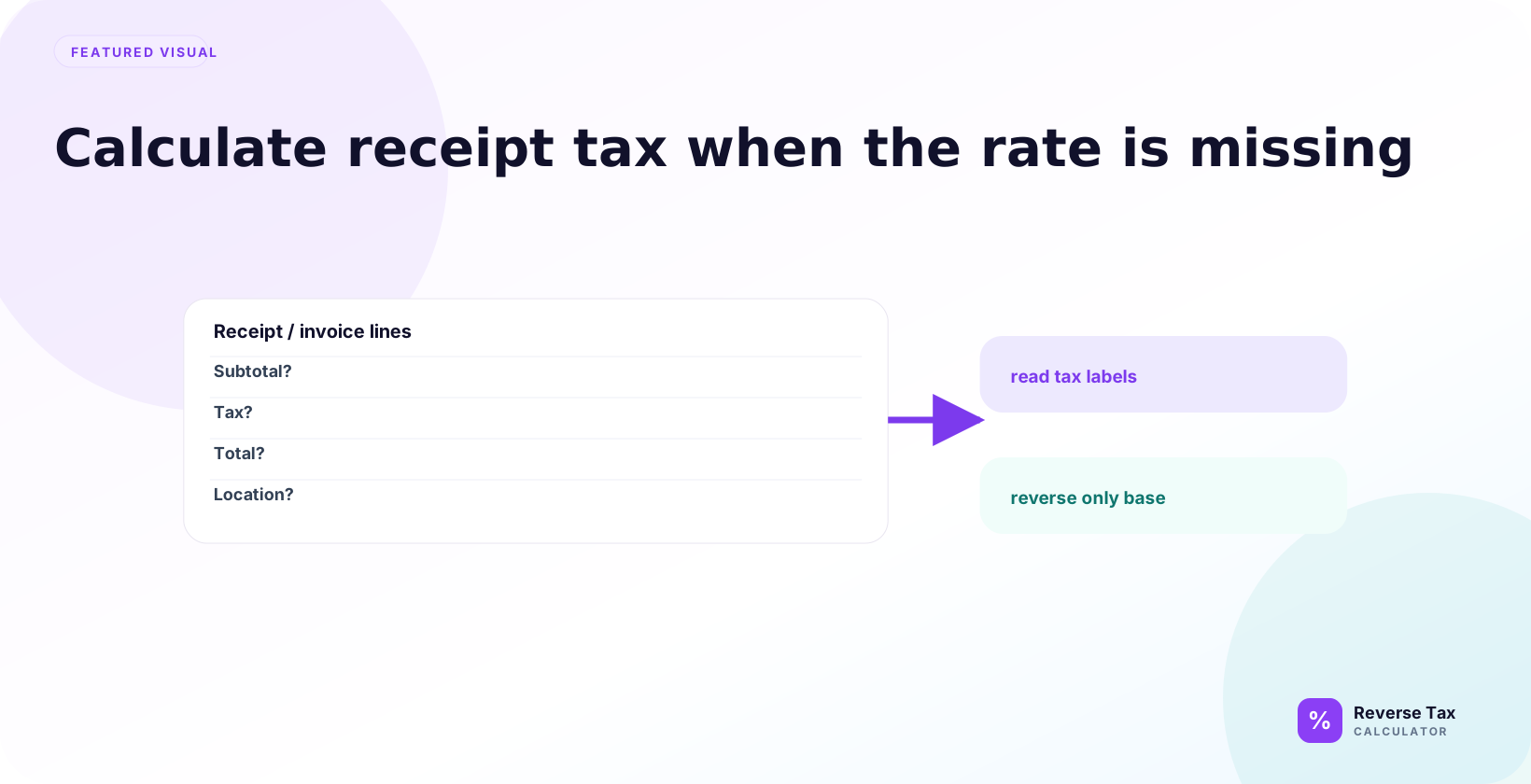
Receipt tax with a missing rate can be calculated only when the receipt gives enough other values, such as the tax amount, taxable subtotal, or final tax-inclusive total. The implied rate equals included tax divided by the before-tax taxable amount, then multiplied by 100. Missing-rate results are estimates when the receipt contains exempt items, discounts, shipping, tips, multiple rates, or rounded line-item tax. A printed subtotal gives the cleanest rate check.
A missing rate is common on short receipts, payment slips, delivery receipts, marketplace orders, and older paper records. The important rule is simple: use the receipt evidence first. Do not guess a rate just because a nearby city or state has a familiar sales tax percentage.
How Do You Calculate Receipt Tax Without the Rate?
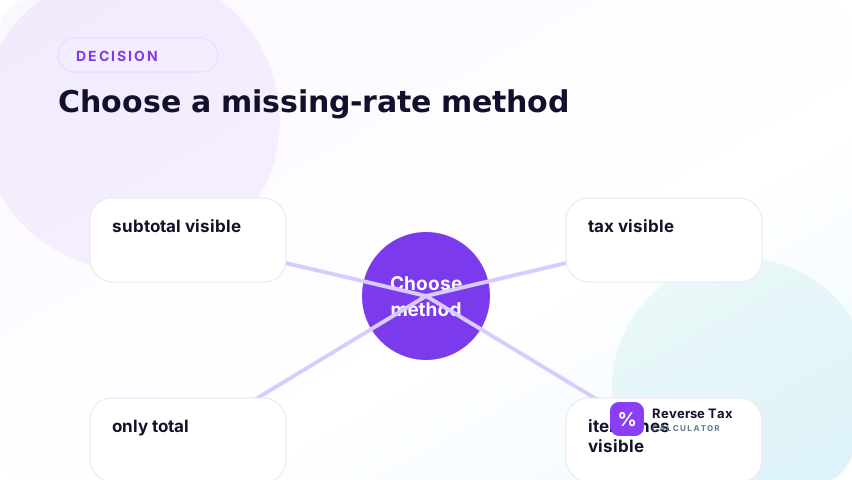
If the receipt shows subtotal and total, subtract subtotal from total to find tax. Then divide tax by subtotal to find the effective rate.
Formula:
Tax amount = Total minus subtotal
Missing rate = Tax amount divided by subtotal
If the receipt only shows a tax-inclusive total, you cannot calculate the exact tax without a rate or a separate tax amount. You need either the tax amount, the pre-tax subtotal, or a verified jurisdiction rate.
What Does a Missing Receipt Tax Rate Mean?
A missing receipt tax rate means the receipt does not show the percentage used to calculate tax. The receipt may still show enough information to calculate the tax amount or infer the effective rate.
This is not always the same as finding the statutory sales tax rate. A receipt can have discounts, exempt items, delivery fees, deposits, tips, service charges, or multiple rates. Those details can make the effective receipt rate different from the headline rate in a state or city.
Which Receipt Numbers Matter First?
Start with the numbers the receipt actually provides. A shown tax amount, subtotal, taxable sales line, or itemized tax group is stronger evidence than a guessed rate.
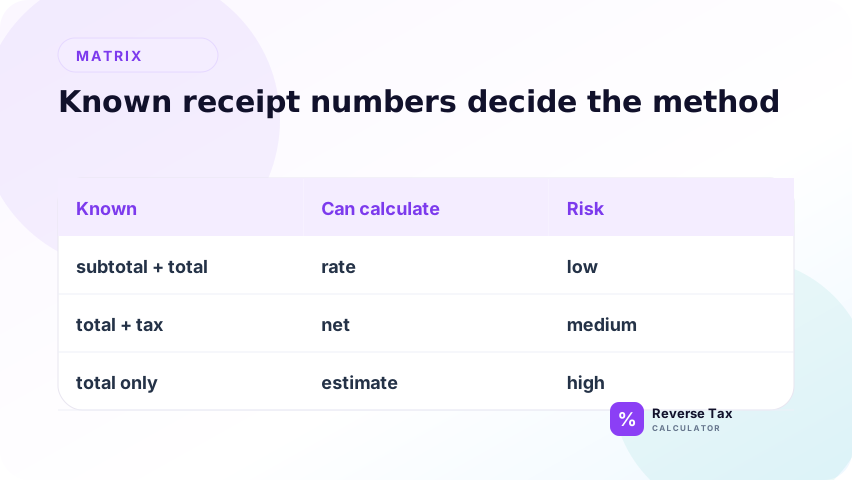
The order of evidence matters. Use shown tax first, then subtotal and total, then location-based rate research only if the receipt does not provide enough information. This prevents a missing-rate problem from turning into a rate-guessing problem.
Start by identifying the visible numbers. A reverse tax calculation is only as reliable as the fields it uses.
If You Have Subtotal and Total
This is the strongest receipt setup. Subtotal gives the pre-tax base and total gives the tax-inclusive amount.
Tax = Total minus subtotal
Rate = Tax divided by subtotal
If You Have Total and Tax Amount
This is also strong. You can remove the tax from the total to find the pre-tax amount.
Pre-tax amount = Total minus tax amount
Rate = Tax amount divided by pre-tax amount
If You Only Have Total
Total alone is not enough for an exact calculation. A $108.00 receipt might be $100.00 plus 8% tax, or it might include taxable and exempt items under another rate.
You need more evidence before calculating.
If You Have Item Lines
Item lines let you separate taxable, exempt, discounted, and fee-based amounts. This is more accurate than applying one rate to the entire receipt.
How Do You Calculate the Missing Tax Rate from Subtotal and Total?
When subtotal and total are known, calculate the tax amount first:
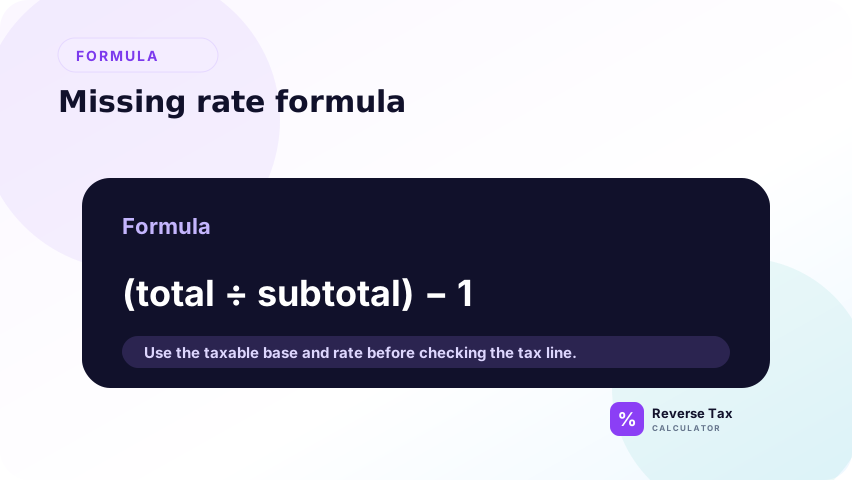
Tax amount = Total - Subtotal
Then calculate the implied rate:
Implied rate = Tax amount / Subtotal
This works only when the subtotal is the taxable before-tax base. If the subtotal includes exempt items, tips, shipping, or discounts that were not taxed the same way, the implied rate may be misleading.
Use this formula:
Missing tax rate = (Total minus subtotal) divided by subtotal
Then multiply by 100 to convert the decimal to a percentage.
Example with a Missing Rate
Receipt subtotal: $80.00
Receipt total: $86.60
Tax amount = $86.60 minus $80.00 = $6.60
Missing rate = $6.60 divided by $80.00 = 0.0825
Tax rate = 8.25%
This gives the effective rate used on the taxable base shown by the receipt.
How Do You Calculate Tax When the Receipt Shows Total and Tax Only?
If the receipt shows total and tax amount, subtract the tax amount from the total. You do not need the rate to find the pre-tax amount.
Formula:
Pre-tax amount = Total - Tax amount
This method respects the receipt's own tax line and rounding method, which is often stronger than reconstructing the tax from a guessed rate.
Subtract the tax amount from the total.
Example:
Total: $53.75
Tax: $3.75
Pre-tax amount = $53.75 minus $3.75 = $50.00
Rate = $3.75 divided by $50.00 = 7.5%
This works because the tax amount has already been separated by the seller.
How Do You Calculate Tax When Only the Final Total Is Visible?
If only the final total is visible, the tax amount cannot be reliably calculated without another known value. You need the tax rate, the tax amount, the subtotal, or enough receipt context to find the likely rate.
A final total alone can be produced by many different subtotal and rate combinations. Treat any result from total alone as an estimate unless more evidence is found.
You cannot calculate exact receipt tax from the final total alone. You can only calculate a scenario if you supply a rate.
Example:
Final total: $107.50
Assumed rate: 7.5%
Pre-tax amount = $107.50 divided by 1.075 = $100.00
Tax = $107.50 minus $100.00 = $7.50
This is a valid arithmetic scenario, not proof that the receipt used 7.5%.
Why Should You Avoid Guessing the Missing Tax Rate?
Guessing creates false precision. A receipt may have been issued in a city with local tax, a special district rate, or item-specific exemptions.
For reimbursement, bookkeeping, or audit support, a guessed rate should be labeled as an assumption. IRS Publication 463 explains that records generally need written evidence and that approximated or estimated amounts are not enough for certain deductible expense substantiation. It also says documentary evidence such as receipts, canceled checks, or bills is generally needed for expenses, and adequate evidence ordinarily shows the amount, date, place, and essential character of the expense.
How Do You Use Location to Find the Likely Rate?
Use location only after checking receipt evidence. The store address, delivery destination, ship-to address, or place-of-supply information may point to the likely rate.
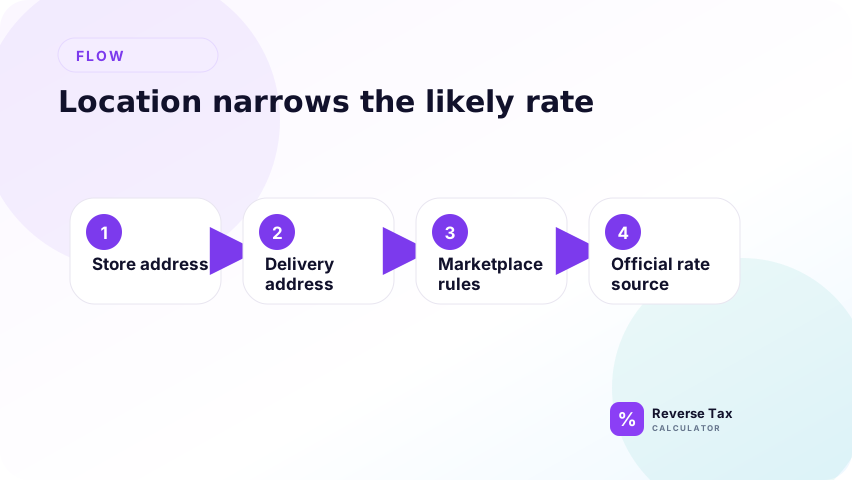
Location-based rate research is especially important when state, city, county, district, GST, HST, PST, QST, or VAT rules differ. The rate must match the transaction context, not just the user's current location.
Use the receipt location, not your home address. Sales tax is usually tied to the sale location, delivery destination, or sourcing rule, depending on jurisdiction.
Store Address
The store address is often the best clue for in-person purchases.
Delivery Address
For shipped goods or delivery orders, the delivery address may matter more than the seller location.
Marketplace or App Orders
Marketplaces may collect tax based on destination rules, platform settings, and item taxability. The receipt total can include platform fees or service charges that need separate treatment.
Decision Matrix: Which Method Should You Use?
| Receipt evidence | Best method | Confidence | Main risk |
|---|---|---|---|
| Subtotal and total | Subtract subtotal from total | High | Total may include tip or fee |
| Total and tax amount | Subtract tax from total | High | Tax line may combine several rates |
| Item lines and total | Group items by taxability | Medium to high | Exempt items may be mislabeled |
| Store location only | Look up official rate | Medium | Rate may not match item treatment |
| Total only | Scenario calculation only | Low | Exact tax is unknown |
Operational Workflow for a Missing Receipt Rate
| Step | Action | Why it matters |
|---|---|---|
| 1 | Identify total, subtotal, and tax lines | Finds the strongest available evidence |
| 2 | Remove tips, gift cards, and payments | Prevents non-tax fields from entering the tax base |
| 3 | Check for taxable and exempt item lines | Avoids applying one rate to every item |
| 4 | Calculate the effective rate if subtotal exists | Reconstructs the receipt rate from actual numbers |
| 5 | Verify official location rate if needed | Supports compliance-sensitive use |
| 6 | Document assumptions | Keeps the result auditable |
What If the Calculated Rate Looks Strange?
A strange implied rate often means the receipt contains mixed items, shipping, tips, discounts, rounding, or local taxes. It does not automatically mean the math is wrong.
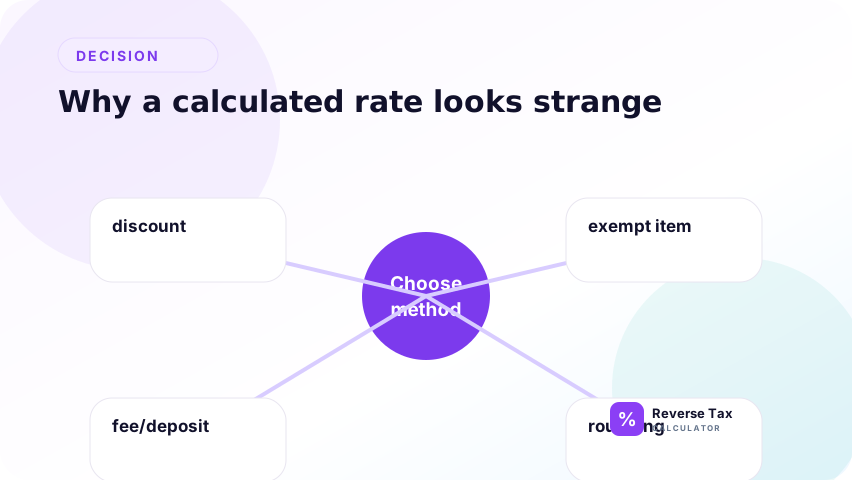
First rebuild the receipt with known values. Then check whether the subtotal was the real taxable base. If the receipt includes mixed tax groups, calculate each group separately rather than forcing one implied rate.
A strange rate does not always mean the receipt is wrong. It may mean the taxable base is smaller than the subtotal shown, or the receipt includes multiple taxes.
Discounts
Discounts may reduce the taxable base before tax. If the receipt shows a discount after subtotal, check whether the seller taxed the pre-discount or post-discount amount.
Exempt Items
Food, clothing, medicine, and digital goods can be treated differently depending on jurisdiction. An exempt item lowers the effective rate across the whole receipt.
Fees and Deposits
Bottle deposits, environmental fees, delivery charges, and service fees may not follow the same tax rule as merchandise.
Rounding
Line-level rounding can create a one-cent difference when compared with total-level arithmetic.
How Do You Calculate a Missing Rate from Tax Amount Alone?
You cannot calculate a rate from tax amount alone. You also need the taxable base. For example, $8.00 of tax could be 8% of $100.00, 10% of $80.00, or another rate and base combination.
If the tax amount is known but the base is missing, use the tax amount to find the pre-tax price only when the rate is later verified.
Tax amount alone is not enough. You also need the taxable base.
If tax is $4.00, the rate could be 8% on $50.00, 5% on $80.00, or another combination. Tax amount without subtotal is only a partial clue.
How Do You Calculate the Pre-Tax Amount If You Find the Rate Later?
If you later find the correct rate and you already know the tax amount, use:
Pre-tax amount = Tax amount / Tax rate
If you know the final total and the rate, use the reverse tax formula:
Pre-tax amount = Total / (1 + Tax rate)
Choose the formula based on which values are actually known.
Use the reverse tax formula:
Pre-tax amount = Total divided by (1 plus rate)
Example:
Total: $64.50
Verified rate: 7.5%
Pre-tax amount = $64.50 divided by 1.075 = $60.00
Tax = $4.50
Entity Relationship Table
| Entity | Meaning | Relationship |
|---|---|---|
| Total | Final amount charged | May include tax, fees, tip, and payments |
| Subtotal | Amount before tax | Usually the tax base, but not always |
| Tax amount | Tax charged | Difference between taxable base and total tax |
| Tax rate | Percentage applied | Can be calculated only when base is known |
| Taxable base | Amount subject to tax | May exclude exempt items and discounts |
| Jurisdiction | Place with taxing authority | Determines possible rates and rules |
Common Mistakes When the Rate Is Missing
| Mistake | Why it weakens the result | Better action |
|---|---|---|
| Dividing tax by total | Uses tax-inclusive denominator | Divide tax by subtotal |
| Using state rate only | Ignores local tax | Use combined location rate |
| Treating total as taxable base | Includes tax in the base | Remove tax first |
| Ignoring exempt items | Overstates rate | Separate item groups |
| Using a guessed rate silently | Creates false certainty | Label assumptions |
Information Gain: Effective Rate vs Official Rate
The effective receipt rate is the rate implied by the receipt numbers. The official rate is the statutory combined rate for a jurisdiction and date.
These can differ. If only some items are taxable, the effective rate across the full receipt will look lower. If there are special taxes, the effective rate may look higher. This distinction helps users avoid accusing a seller of an error when the receipt is actually mixing taxable categories.
Trust Boundary for Missing Rate Calculations
Missing-rate calculations are diagnostic. They can infer a possible rate or pre-tax amount, but they cannot prove the legal rate, product taxability, exemption status, or whether the receipt was prepared correctly.
Use official rate sources, the original receipt, and transaction context before relying on the result for business records, refunds, or compliance-sensitive decisions.
A calculator can reverse arithmetic. It cannot prove the legal taxability of each receipt line without jurisdiction rules, item classification, transaction date, and sourcing facts.
Use the result for understanding, reconciliation, and estimation. For audits, returns, or disputes, keep the original receipt and verify the rules with the official tax authority.
If the receipt has item lines, use the itemized receipt reverse tax workflow before assuming one rate.
If the tax amount is known but the rate is missing, use pre-tax price from tax amount once the rate is verified.
If the rate is known and the total includes tax, the reverse tax formula is the correct calculation path.
Frequently Asked Questions
Can I calculate receipt tax without knowing the rate?
Yes, if the receipt shows subtotal and total, or total and tax amount. No, if the receipt only shows final total.
How do I find the missing tax rate on a receipt?
Subtract subtotal from total to find tax, then divide tax by subtotal.
Why does my receipt rate not match the official rate?
The receipt may include exempt items, discounts, fees, multiple taxes, or rounding.
Is a guessed tax rate acceptable for bookkeeping?
It may be acceptable as an internal estimate, but label it clearly and keep supporting evidence.
What source should I use for expense records?
For U.S. federal expense substantiation, IRS Publication 463 explains recordkeeping and documentary evidence expectations. State sales tax treatment still comes from the relevant state or local tax authority.
Sources and Notes
- Formula source: arithmetic relationship between subtotal, total, tax amount, and rate.
- IRS Publication 463, Recordkeeping and How To Prove Expenses
- Accuracy note: use official state or local tax authority sources for actual rate and taxability verification.